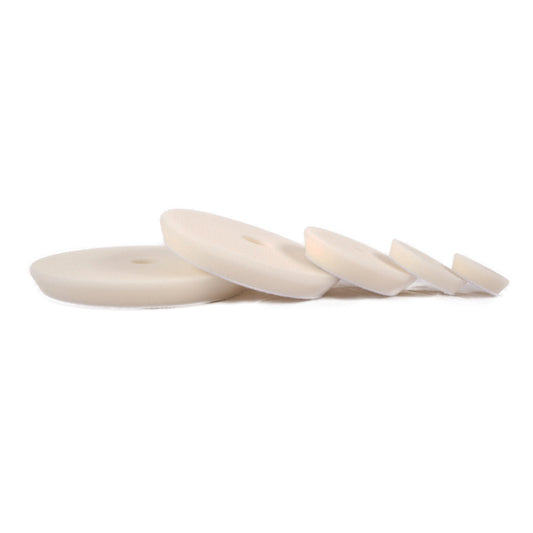
Why Polishing Pads Matter
The polishing pad plays a crucial role in every paint correction process. While the polish provides the abrasives, the pad controls how those abrasives interact with the paintwork, directly influencing cutting power, finishing ability and the overall result. Choosing the correct polishing pad helps achieve better correction, improved gloss and a more consistent finish.
Whether you're carrying out a light enhancement or correcting heavily marked paint, using the right combination of pad and polish allows you to work more efficiently while preserving as much clear coat as possible. Modern polishing pads are designed for specific stages of correction, making it easier to tailor the process to the condition of the paint.
From foam polishing pads for refining the finish to more aggressive cutting pads for removing defects, selecting the appropriate pad helps maximise both performance and safety throughout the polishing process.
Different Pads for Different Jobs
Not all paint defects require the same level of correction, which is why polishing pads are available in different densities and constructions. Softer finishing pads focus on refining the paint and maximising gloss, while firmer cutting pads increase correction when paired with suitable polishing compounds.
Many enthusiasts also use medium polishing pads as an excellent all-round option for removing light defects while leaving behind an impressive finish. Matching the pad to the polish and paint condition produces better results than relying on a single pad for every task.
Foam Polishing Pads Explained
Foam polishing pads remain the most popular choice for machine polishing because they offer an excellent balance between correction, finishing ability and ease of use. Available in a range of densities, they allow users to tackle everything from heavy defect removal to ultra-fine finishing using the same polishing machine.
When combined with the correct polish, foam polishing pads help deliver predictable correction while reducing unnecessary heat and maintaining excellent control throughout the polishing process.
The Right Pad Improves Every Result
Even the best polish cannot perform at its full potential without the correct pad. A well-matched combination allows abrasives to work more efficiently, improves defect removal and creates a cleaner, more uniform finish. This not only produces better-looking paintwork but also reduces the amount of time needed to achieve the desired level of correction.
Matching the Pad to the Polish
The best polishing results come from matching the pad to both the polish and the condition of the paintwork. A cutting pad paired with a heavy compound delivers greater defect removal, while a softer finishing pad combined with a finishing polish refines the surface to maximise gloss and clarity.
Many enthusiasts also choose a medium polishing pad with a one step polish to achieve an excellent balance between correction and finishing. This combination is ideal for routine paint enhancement where the goal is to improve the overall appearance without carrying out a full multi-stage correction.
Preparation Is Just as Important
Before polishing begins, the paintwork should always be properly prepared. Washing with a quality car shampoo followed by suitable decontamination products removes bonded contamination that could otherwise interfere with the polishing process.
A clean surface allows both the polish and polishing pad to perform more consistently while reducing the risk of dragging contamination across the paint. Proper preparation is one of the simplest ways to improve the final result.
Looking After Your Polishing Pads
Keeping polishing pads clean is essential for maintaining consistent performance. As polish residue and removed paint accumulate inside the foam, correction becomes less effective and the finish can suffer.
Cleaning pads regularly during polishing and thoroughly after each use helps extend their lifespan while ensuring they continue to perform as intended. Well-maintained pads also generate less heat and deliver more predictable results throughout every polishing session.
Part of a Complete Paint Correction System
Polishing pads are only one part of achieving outstanding paintwork. Combined with the correct polish, careful technique and suitable protection, they help unlock the full potential of your vehicle's finish. After correction has been completed, protecting the paint with a sealant, wax or ceramic coating helps preserve the improved gloss while making future maintenance significantly easier.
Whether you're carrying out a quick enhancement or a full correction detail, choosing the right polishing pad helps make every stage of the process safer, more efficient and more rewarding.
Why Choose Auto Glanz Polishing Pads?
Auto Glanz polishing pads have been developed for enthusiasts and professional detailers who want reliable correction, consistent finishing performance and long-lasting durability. Whether you're removing heavy defects with a cutting pad or refining paintwork to maximise gloss, the range is designed to work seamlessly with modern polishing compounds and dual action polishers.
Choosing the right pad for each stage of paint correction helps improve efficiency, achieve a higher-quality finish and make every polishing session more predictable. Combined with the correct polish and careful technique, Auto Glanz polishing pads help deliver professional results on every vehicle.
Frequently Asked Questions
Disclaimer: This content has been created with the assistance of artificial intelligence. While every effort has been made to ensure the information is accurate and up to date, occasional inaccuracies or omissions may occur.

 Link label